
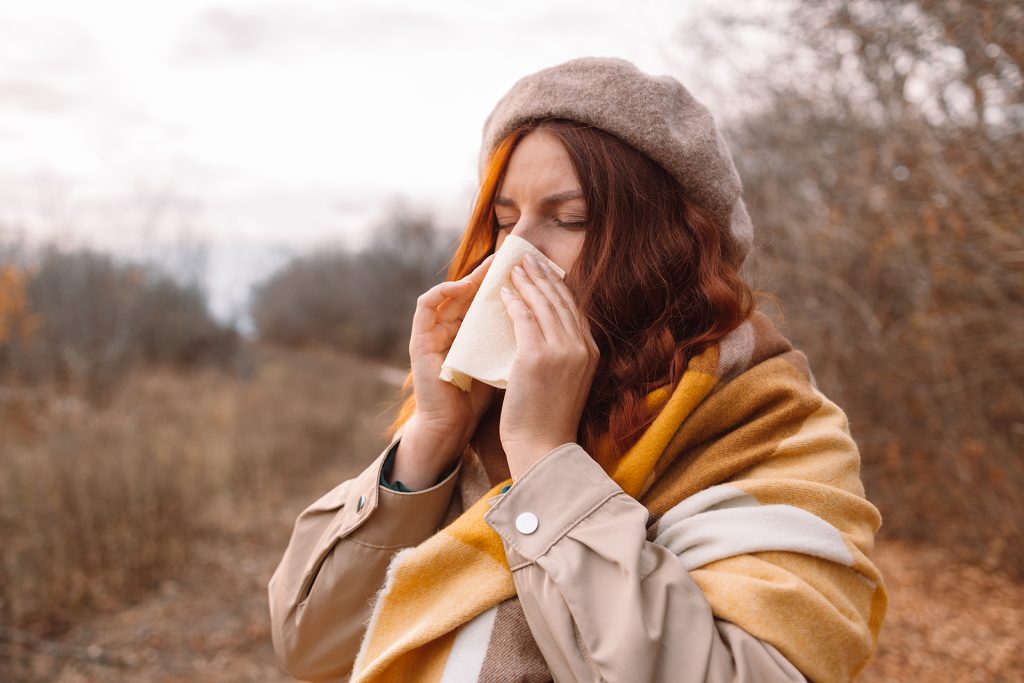
If you’ve been dealing with sneezing, itchy eyes, or a scratchy throat lately this fall season — you’re not alone.
One of the main fall allergy triggers is ragweed. This pesky plant releases pollen from August to November, peaking around September. But it’s not just ragweed — tree, grass, and mold allergens also become more active during these months. Cool nights, warm days, and rainy weather can all create higher pollen levels, worsening allergy symptoms.
Tips for Keeping Fall Allergies at Bay:
Time it Right: Avoid spending too much time outdoors between 10 am to 3 pm, when ragweed pollen and other allergens are high.
While you can’t avoid ragweed and other allergens completely, these tips can help keep allergy symptoms in check.
|
Don’t let fall allergies hold you back. Hooray Health’s supplemental insurance plans can help you access $0 cost unlimited telemedicine visits or $25 urgent care visits^ to get treated. |
See your options at |
^$25 per visit fee for services performed at an in-network location.
The information provided above is not medical advice. It is intended for general informational purposes only. Always discuss any questions or concerns with your healthcare practitioner for proper diagnosis and treatment.
1. https://acaai.org/allergies/allergic-conditions/seasonal-allergies
2. https://www.webmd.com/allergies/ragweed-allergy